Tag: tokyo

  • Travelogues of Japan #9 – the Hokkaido

    Travelogues of Japan #9 – the Hokkaido


    Day by day in Sapporo

    Day 71-72

    The first full day in Sapporo, we spent exploring the city. Our accommodation was right next to Nakajima Park, which was completely blanketed in snow. Of course, we couldn’t resist, we just had to build a snowman!

    After a beautiful walk in the park, we headed to Fog. Cafe, which is right next to a supermarket—later our main source of food.

    The café was fantastic, with a really cozy atmosphere, and they served sandwiches too. We had lunch there, trying the avocado sandwich and the maitake mushroom sandwich. Both were delicious!

    In the evening, we dove into the city’s nightlife and ended up at Bearfoot Bar, where we met a lot of international people and enjoyed some delicious fish and chips for dinner. We stayed out quite late and, let’s just say, had a little too much fun, so the next day, we decided to take it easy. Just chilling and Netflix sounded like the perfect recovery plan!

    Day 73

    The next day, we decided to go shopping and visited a lovely shopping mall located near the Susukino underground station. We spent most of the morning there and even grabbed lunch. For the first time in Japan, we decided to try Italian food. The place was called Le Varo, a kind of pasta bar. It was quite pricey, and we waited a long time for our order, but the pasta was surprisingly very good!

    In the afternoon, we planned to visit the Sapporo Beer Museum. On the way, we stopped next to Odori Park, where there was some sort of international Christmas market happening at the time. However, we didn’t stay long since we were waiting for a bus that took us directly from there to the museum.

    The building of the former beer factory was stunning. The best part, though, was that the museum was free to enter. We walked around, reading all the historical facts about the factory, and at the end, we had the chance to buy tasting samples of three different beers. The atmosphere in the tasting room was lovely, and the beer itself was excellent. I’d definitely recommend visiting this museum to anyone! There weren’t many people, but we still had to wait about 15–20 minutes for the tasting part of the exhibit.

    Day 74-75

    The next day was very calm, we mostly spent it working on our projects inside our accommodation. But at the end of the day, we went out for what I’d definitely consider a top 10 meal in Japan.

    The place was called The Medicine Man, and they served this amazing curry soup that’s very typical for Sapporo. We could choose from different types of soup: vegetarian, shrimp, chicken, or pork; and we were also able to pick our preferred spiciness level. It was absolutely delicious; we even considered going back the next day!

    The evening was quite eventful, we got a real scare from an alarm indicating a magnitude 7 earthquake in Japan. In Sapporo, we only felt a seismic intensity of 4, but it was still the strongest earthquake I’ve ever experienced. I have to admit, though, it was actually kind of exciting, it was one of those unexpected bucket-list moments!

    The next day, we did more shopping and stopped by a great burger place near Susukino called Shogun Burger. They had fantastic options, and it was relatively affordable, so we really enjoyed it.

    Day 76

    The next day was very exciting because we were traveling to Rusutsu. We took a bus from Susukino station (it was also possible to take it from near Sapporo main station) in the direction of Lake Tōya. It was a very convenient connection because it stopped right in front of the Rusutsu ski resort. It was necessary to book this bus in advance, by the way.

    The bus trip wasn’t very pleasant at the beginning due to a very annoying Chinese driver who almost didn’t let us in because he didn’t notice that we had already told him our reservation name. He noted it down but then forgot that we had already talked to him and didn’t want to let us in. Imagine how stressed we were when we thought we wouldn’t be able to get on a bus that we had already paid for. In the end, everything went well, and we enjoyed the most beautiful trip through the mountains of Hokkaido, which were so deeply covered in snow that even the branches on the evergreen trees were bending down under its weight.

    Overall, it was probably the best time we could have arrived in Rusutsu because, before our arrival, the snow conditions weren’t so good since the temperatures were above 0 degrees. One or two days after our departure, it was the same story, while the resort was also expecting more guests since the ski season was starting. Because of this, our timing was just perfect.

    Right after we checked into the Rusutsu lodges and unpacked, we had to go and explore the ski resort. It was very beautiful, but, in my opinion, a little bit too westernized and expensive. I guess that’s just how the resorts are nowadays.

    We also went to ask about our ski equipment and rental; we simply wanted more information about when it would be possible to pick everything up. We ended up paying for the rental (for 3 days of full equipment rental, we paid 11,000 yen per person) and trying on the clothes and ski boots in advance.

    In the evening, we ate at the Rusutsu lodges in a restaurant called The Red House. They had interesting and tasty options, and even a happy hour.

    Day 77-79

    The next day we went out early in the morning, picked up all the equipment, got dressed, and headed to the piste. We spent the first 3 hours just learning. I was the one who knew how to ski, and I was teaching my partner since it was his first time standing on skis.

    We also paid for the lift, which cost approximately 40 euros per person for the first two days at the beginning of the season, and the last day, when more lifts were open, we paid 53 euros per person.

    The next 3 days we spent learning how to ski; basically, most of the days we were at the slope. The piste itself was quite big. You can discover more about the options on the official website of Rusutsu ski resort. For a quick peek, I can provide a picture of the resort retrieved from here.

    Overall, Rusutsu was quite expensive compared to the rest of our Japan trip, but it was definitely worth it. Even the basics like eating out were double or even triple the price. Anyway, we still consider it one of the most fun activities we did in Japan together.

    Day 80 & 81

    The next two days we spent near New Chitose Airport, where we planned to take a plane back to Tokyo. We traveled the whole day, first taking a bus back to Sapporo and then going by train to our room near the airport.

    The travel by the domestic Japan flight was quite different compared to Europe, and I was confused more than once, but of course, in the end, everything went well.

    As we arrived in Tokyo, we checked into the Grand Hotel LDK. We chose this hostel because we had already stayed in it somewhere else in Japan and really liked it. We finished our day early since we were tired from the travel, but we were really looking forward to our last days in Tokyo and Japan.

    Day 82-83

    We then decided to visit Akihabara, the electric heart of Tokyo’s otaku culture. We wandered through the streets, surrounded by anime shops and gaming arcades. I was searching for a provocative manga T-shirt as a souvenir for my stepfather. It’s the kind of place where you could spend hours just soaking in the energy.

    One of the absolute highlights of my trip to Japan was finally getting my hands on a Japanese knife. If you’re into kitchen gear, Kappabashi in Tokyo is basically paradise. This iconic street is packed with shops selling professional kitchen and restaurant equipment, and the knife stores are next-level. I was on the hunt for a gyuto, and let me tell you, the craftsmanship is breathtaking. I’m still in awe that this beauty is now part of my collection!

    For food, we stumbled upon Bep Viet, a cozy spot serving up delicious Vietnamese dishes. The flavors were so fresh and vibrant, making it the perfect break from all the ramen we had so far. The atmosphere was warm and inviting, making it a great place to recharge after a long day of exploring.

    In the evening, we headed back to LDK Hostel and spent hours playing pool. It was such a fun, laid-back way to unwind, especially after all the walking and sightseeing. The hostel had a great vibe, and it was nice to just hang out and chat with other travelers.

    The last few days in Tokyo were all about soaking up the city’s energy. We didn’t have a strict itinerary, just wandering the streets, popping into random shops, and enjoying the little moments. Tokyo has this amazing mix of tradition and modernity, and every corner feels like a new discovery. It’s the kind of place that makes you want to slow down and savor every second.

    Day 84

    Our last day in Tokyo was a mix of final adventures and goodbyes. We started with the inevitable packing, which always feels like a puzzle, trying to fit all the items into the bags.

    Before leaving, we made sure to squeeze in one last Tokyo experience – we headed for okonomiyaki near Ueno Park. The savory pancake was the perfect comfort food, crispy on the outside and packed with flavor. Ueno Park itself was beautiful, even in the winter chill. The atmosphere was calm, and it was a nice way to soak in a bit more of the city before heading to the airport.

    Speaking of the airport, we grabbed a bite of Chinese ramen before our flight. It was a hearty, spicy bowl that hit the spot, an unexpected but delicious way to end our culinary journey in Japan.

    ***

    The flight back felt shorter than anticipated, almost as if Tokyo didn’t want to let us go. It was a whirlwind of a trip, but every moment was worth it. Until next time, Japan!
  • Travelogues of Japan #4 – The oldest town, Kyoto

    Travelogues of Japan #4 – The oldest town, Kyoto


    Day by day…

    Day 21

    Travel to Kyoto was quite unusual, since we took a bus instead of a Shinkansen, guess why… of course, the cost was much cheaper. We booked the tickets online, going from Nagoya station to Kyoto station, Chuoguchi, I believe it was through the website called WILLER.

    The travel was not the most pleasant one, since it took around 2h 15m, and right after our arrival, we saw how touristy Kyoto is. We took a bus to our hostel, which is one of the main lines that goes through the most touristy places, I think it was number 206 or 207. We loaded ourselves on the bus… literally… with the heavy backpacks, not knowing what was ahead of us at that time, trying to be the most out of the way possible, heading to the very back of the bus. After a few stops, at least 50 people got into the tiny 15-seat bus. OMG! We had to start our journey to the front of the bus well in advance before we arrived at our stop (since you pay the driver). We had to squeeze through all these people to the very front and get out. I wish to say I never had to get on this bus again, but as it was one of the main lines, it was not really possible to do without using it again.

    We were so extremely exhausted from the whole experience of getting from Nayoga to Kyoto. We arrived at the hostel – Gion Ryokan Q-beh, left our stuff behind, and went to a nearby shop to buy some lunch while waiting for check-in. After taking a shower and resting, we only went out to have some dinner. We went to a ramen place nearby, where it was okay but not worth mentioning the name but here is a picture.

    The hostel itself was very pleasant and we enjoyed our stay a lot. It had really great common areas, where we spent a lot of time at the end of our Kyoto experience, working on our projects. The rates were quite expensive, around 34 per night per person, which is one of the highest rates we spent on accommodation in Japan overall, but I guess in Kyoto, it is so over-touristy that you just have to accept that it is simply the price you will pay if you want something somewhat decent. 

    In the evening we only took a little walk to the nearby Yasaka Shrine, to took in the vibes of Kyoto.

    Day 22

    The next day, we woke up a little bit later and were quite excited to visit the famous bamboo forest in Kyoto. Which was, in my opinion. Not worth it at all. We took maybe the longest overfilled bus to get there, and it took around 1 hour from our hostel. And damn the number of people there, it was a tragedy. We were there around 10-11ish, and it was already so full. The bamboo forest was not worth it at all, at least not with all the people just F***G around. It really didn’t make my day, and made me really nervous. Everyone there was just there trying to take a stupid picture that they can showcase on their social media with some stupid description about how life is amazing, and this bamboo forest is so magical… but in the end, it just sucked. That’s the reality you will never see in any picture on social media. Btw, on our way back, there were even more people!

    The only thing that saved this awful morning was my partner, since he found a nice hike that was, btw, much better than the tiny and lame bamboo forest full of people. We ended up hiking, and it was very nice and almost completely human-free. If you are interested, here is the trail that we took. Definitely Vanesa approved, just look at the beauties we saw!

    The trail was not so straightforward. For example, there was a fence?!?! After translating what was written there, it was clear we could pass, but it got quite confusing at that time. If you want more details about how we went, you can follow our exact trail over here.

    In the evening we went for a tempura in a restaurant called 京都海老天丼 徳. The food was great, but a little bit too expensive for what it was, in my opinion.

    Day 23

    For me, day 23 was the best day in Kyoto. We woke up super early, around 5:30, to get to the famous Fushimi Inari Taisha temple 伏見稲荷大社. 

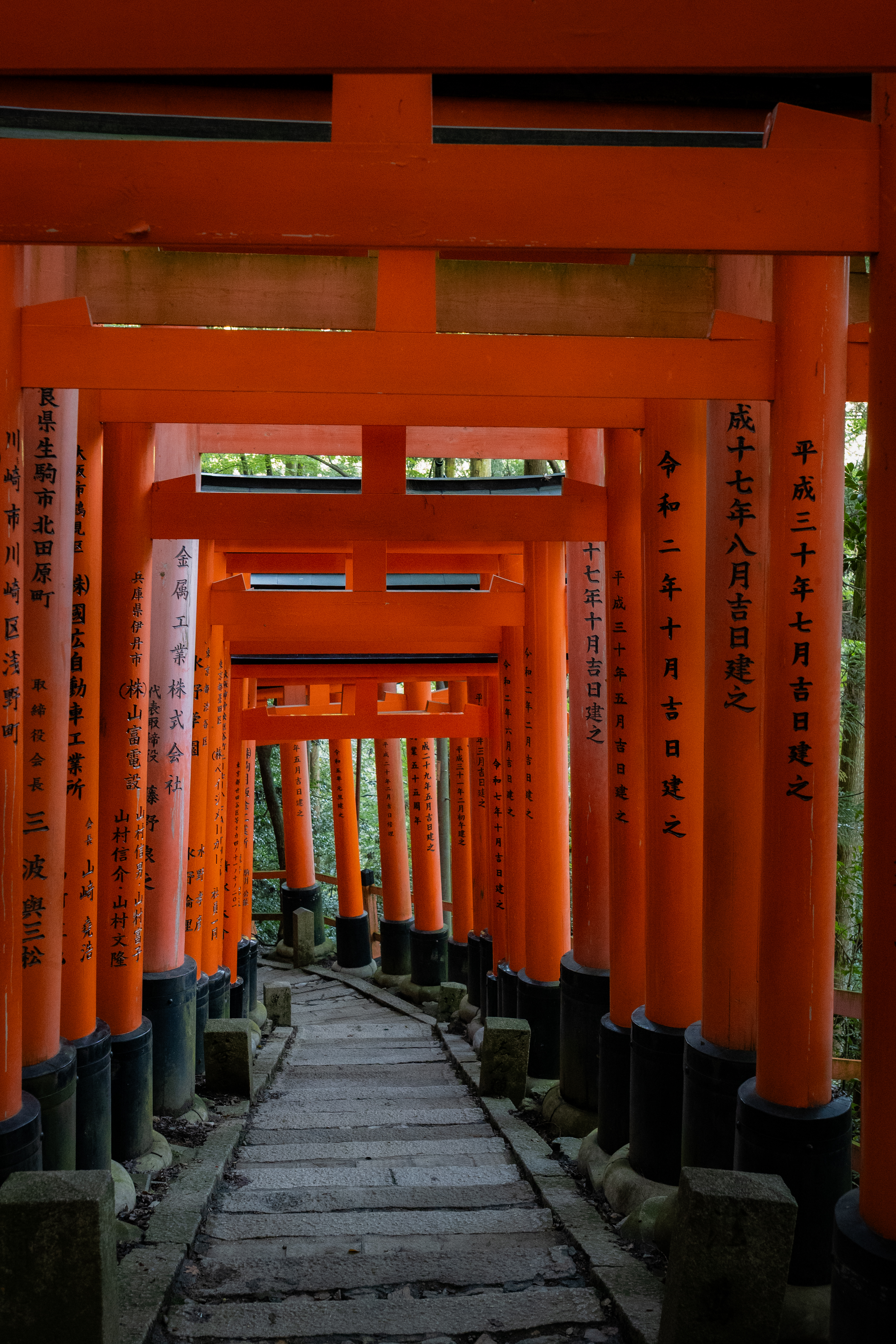
    We decided that based on our experience from the day before, this place would be crazy overcrowded, and so, naturally, we made a decision to wake up crazy early. We started our day at around 5am and took the first public transport that we could catch, heading right to the temple. We arrived there just after 6 o’clock, and there were already some crazy people like us. We took a hike to the top, passing these beautiful, bright red shrines, taking pictures, and enjoying the views. In about 1-2 hours, we reached the top (picture time included). On our way down, we started to notice that there were many more people, and it started to be a little bit frustrating; however, happy as we were already seeing all the beautiful sights, we didn’t mind so much. 

    After we arrived at the very beginning of the temple, at around 9, the number of people had drastically increased. I cannot imagine what the place would look like around 11 or 13 o’clock.

    After this, we decided it was simply too early and not enough to stop our touristic activities, and so, we did what I would say was the hardest hike we did in Japan so far. We were hiking to Mount Atago. If you are interested in the hike, here is the link to the Komoot trail, and here is what we actually did on the Relive app. Please don’t get confused by the long way through the city you can see on the map. We were actually going on a bus. We took it from the Nonomiya bus stop in Kyoto, located not so far from the bamboo forest, and got off at Kiyotaki bus stop, using bus number 92, where we actually started the hike.

    If you are looking for a nice, challenging hike, this is definitely the one for you. We did an elevation of approximately 1200m, and it was quite steep! Basically, the whole way was uphill. The top was quite touristy, but mostly populated by school trips or local tourists that were probably taking a different way because we didn’t see any of them on our way up. The very top was interesting, the temple located there was almost mysterious, and we kept wondering how people managed to bring food and other supplies to the top of the mountain in the past.

    The way back, we took a different trail, which started just before the stairs that led to the temple, taking the trail on the right. I would recommend you to be careful with what trail you choose and follow the map thoughtfully, otherwise you might get lost easily. After finding the right path, it was a pretty straightforward thought. On our way down, we met only one person. Which was good and worrisome at the same time. The way just fell a little bit abandoned. What made it the scariest bit was when, at some point deeply in the mountain, we reached a little settlement guarded by this statue.

    It felt like we entered a place stuck in time, the old buildings, almost falling apart, but it was obvious that someone lived there, as we saw how a new set of clothes was hanging out in the sun for them to dry. The signs of Keep Out were everywhere. The most uncomfortable thing was that even though it was obviously inhabited, there was no one to be seen. The quietness of the place was simply unsettling, and I had a feeling that we were not welcome here at all. We couldn’t do anything else then pass through there because it was simply the only way to go. After this, nothing exceptional happened. We simply finished the trail, forgetting about this mysterious place. 

    Day 24

    The next day we woke up we woke up with the biggest hiking hangover ever. I don’t know for what reason I was so tired; I feel the whole day was just about my groggy existence. 

    Even though we were tired, we had a big quest in front of us. Shopping. We were planning to take some souvenirs with us home to bring to our friends and families. Our initial plan was to do a big shopping in our last destination, which was Tokyo, buy a big luggage and just stuff it with all the souvenirs we would buy. But in Kyoto, we had a better idea.

    We decided to shop for 90% of the items in Kyoto, and then send a parcel to my family in Slovakia. The reason for this was that if we sent it by boat, the cost should be relatively cheap (and possibly cheaper and more stress-free than taking extra luggage), and anyway, we would not come before the middle of December, which is about 2 months from this day. So we made our shopping list and went hunting for souvenirs…

    Day 25

    The next day, we still had some items on our shopping list, and so after a nice breakfast, we headed for the city again. Among the places we were shopping in these past 2 days were, for example, the Nintendo store in Kyoto, the Hands, where we could buy some fans and matcha sets for reasonable prices. We also visited some smaller souvenir stores along the Kyoto-Kawaramachi, and also bought an old tea set in an antique store, located near Yasaka Shrine. We also ended up wandering in a quite nice street called Nishikikoji-Dori, where I bought some nice tea blends. 

    In the evening we went eat to a place called . I had this great katsuobushi udon noodles and my partner had a tofu udon. I would definitely recommend the place, but it felt rather touristy than something a Japanese would go for.

    Day 26

    On our last day in Kyoto, we were sending the package. We went to a Japanese post office, specifically the Kyōto Kiyomizu Post Office 京都清水郵便局. They were so lively and helpful there, the younger worker even spoke a pretty good English. 

    First, we went there and bought a box, then headed to our hostel to pack everything. We came back to the post office ready to send it, but realised we had to make a list of all the items we are sending! So we made such a mess in there, all the workers looking at us as we were unpacking it, the newspaper flew all around the office, we made such a mess, I was ashamed of us, but what can you do if you don’t remember what you put in? 

    Finally, we managed to put everything back, and we were ready to send it. We paid approximately 40 euros, if my memory is correct, which was from Kyoto to Slovakia, sending it by ground. This was much cheaper than flying by plane, but at the same time, we are not quite sure when it will arrive. We hope before Christmas, which is in two months. As I am writing this, the parcel is somewhere in the middle of the ocean. If you are interested in the outcome of this, please let me know in the comments, where I can also answer you! 

    For lunch, we finally had some good stuff. In general, in Kyoto, everything was overpriced and, in my opinion, not worth the money we paid for it, but this place was great! It was called Tonkatsu Buta-Gorilla – Shinkyogoku Rokkaku. They had the best katsu there, including katsu curry that was served with some miso soup and cabbage. The best thing about this place was that you could get a free refill of cabbage, miso soup, and rice! Basically all you can eat! It was very much worth it, and I was so happy that we finally had something nice in Kyoto. 

    * * *

    The evening of that day was very calm, as we were preparing for our next destinations, Hiroshima and Yamaguchi!

  • Travelogues of Japan #1 – Arrival to Tokyo

    Travelogues of Japan #1 – Arrival to Tokyo


    Day by day…

    Day 1

    I would like to write about my first day in Japan as if it were the most magical moment in my life, but the truth is very far from my imagination. We arrived in Tokyo early in the morning, groggy from an almost 14-hour flight. Since I paid 40 euros for a travel cushion, I would expect to get some good quality sleep, but trust me when I say it was all just marketing. Nothing could have prepared me for this horrible trip. The only sleep I got was after 10 hours of constantly shifting in my seat, and I think I just passed out on my passenger table. I woke up one hour after breakfast was served. I must say that the food on the plane was surprisingly yummy. Many small dishes, very Japanese style.

    We arrived at the Haneda International airport, where we passed border security. It went quite smoothly, especially with the use of the QR code from Visit Japan Web. The staff working at the airport were lovely and made lots of jokes about our 3-month holiday. At this point, I was still full of energy, probably because of the excitement, which very quickly disappeared after we got to the metro and had no idea how to use it.

    We finally arrived at the hostel called Hostel Bedgasm, and guess what, there was no one! We had to wait for 40 minutes before the staff arrived, so we were able to store our luggage at the reception until we were able to check in at 15:00 (it was 10 at that time). In general, this hostel is good for meeting new people, and there is a nice community, but I personally think it could have been cleaner. 

    Since the check-in wasn’t happening anytime soon, we took our first trip in the city. We were headed to a restaurant recommended by my friend. He said to us: This is the best curry in Tokyo! The place is called Rice Curry Manten. The restaurant is situated in the middle of nowhere, and it is one of the places where you can truly immerse yourself in Japanese culture. We arrived at midday, the time when all the corporate people go out to have lunch. The restaurant is very small, about 15 covers max, all surrounding a tiny kitchen in the middle of the restaurant, where you can see how your curry is prepared. The menu is very small, around 8 dishes all curry based, with the prices starting at 800 yen. Please do not expect any luxury, for Japanese working men do not have time for any. You will be served within 2 minutes, and when finishing your dish, thank and pay right to the chef directly. The whole experience was over in about 15 minutes, and we were standing outside sharing our impressions. I have never experienced anything like that.

    Day 2

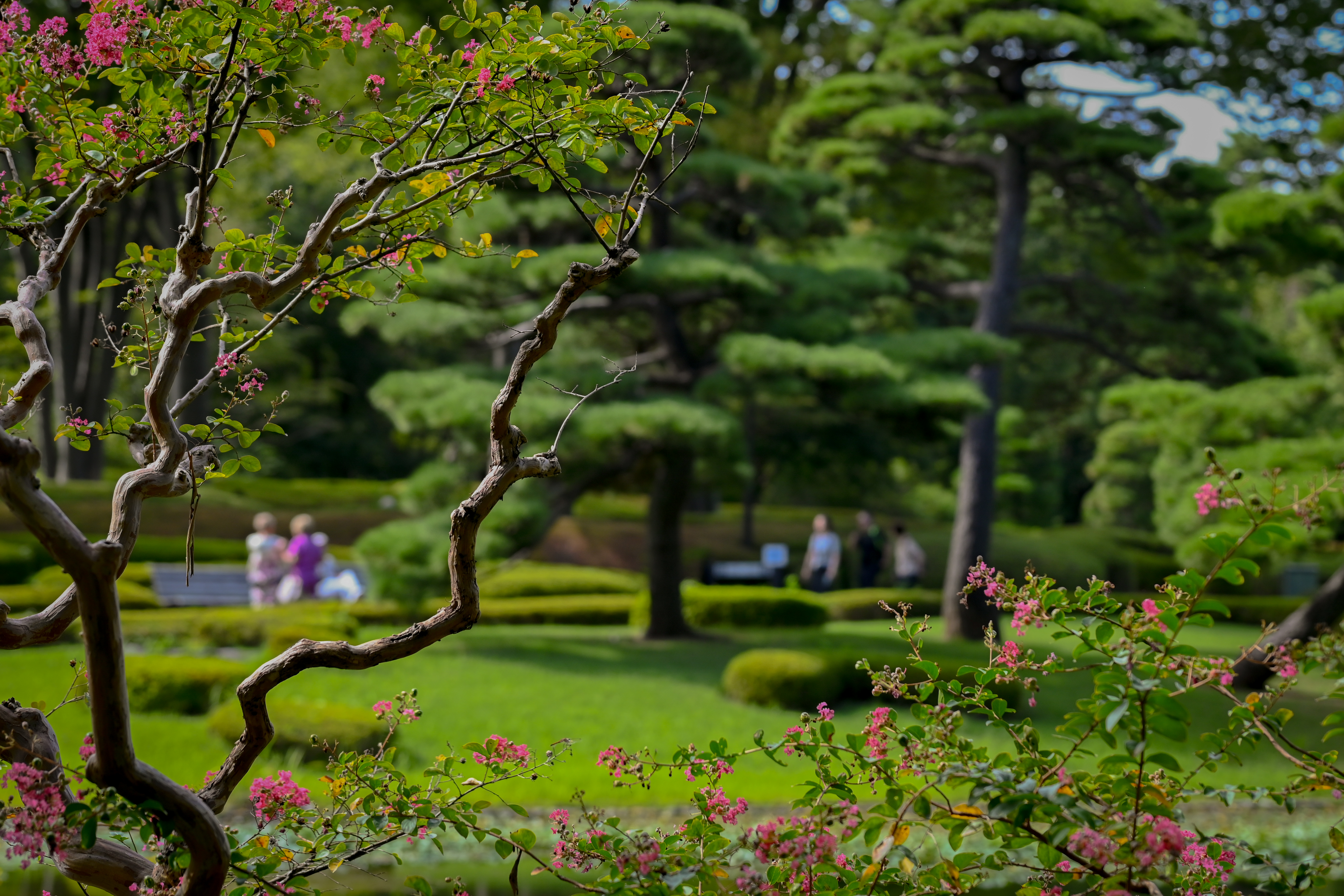
    The next day, we slept in. For me, it was very easy to sleep through the whole night, even though I woke up a few times during the night. I was very surprised by this since I expected to struggle due to the time zone difference. My companion wasn’t as lucky with the sleep, though. Later in the day, we went to the royal palace gardens situated in the middle of Tokyo. The place was beautiful and very huge. The downside was that we discovered that tiger mosquitoes attack also during the day in addictions to the evening and night. The first time I killed a mosquito sitting on my partner’s cheek freaked him out as he thought that he is going to catch Japanese encephalitis 😂.

    After the park, we decided to have a meal in a nearby mall, the palace side building. You can find many similar places around this location and visit one of their restaurants. We found a place called Tonkatsu Maruya and ordered a Katsu Don! It was amazing, much better than I had in Europe and much cheaper. The staff was great, smiling while we tried to talk some Japanese with her. She was so genuine and humble, it made my day.

    Day 3

    The 3rd day in Tokyo was crazy hot! The temperatures reached up to 32°C, and so, by the power of the weather, it was decided we would spend the day at the Tokyo National Museum. On the way to the museum, we decided to have a sweet breakfast. In my Tokyo research, I found interesting meals we can try in the area. One of the ones I couldn’t live without trying was taiyaki, a waffle-like pastry with filling shaped as a fish. I asked for matcha and my partner a classic red bean paste. Both were very lovely and interesting snacks. I feel the matcha one was actually a red bean paste mixed with matcha, quite lovely!

    As we continued our way to the museum, we passed a street famous for its kitchenware and restaurant supplies, called Kappabashidogugai. As a chef, I would very much like to get a Japanese knife that I bought in Japan. I swear on this street, you can buy anything that your heart desires and your wallet allows. 

    The museum is situated in the middle of Ueno Park. It is a beautiful building full of interesting historical artefacts from Japanese culture. We paid only 1000 yen per person, which is about 6€. Among others, there was also a smaller museum covering a bigger part of Asia.

    My advice? Avoid touristic restaurants in Japan!

    In the evening of that day, we decided to go for Kobe beef. We ate in KOBE BEEF WAGYU-KATANA ASAKUSA. And damn, that was expensive! I have to give you a little spoiler, but I don’t think it was worth it. I mean, I am glad we did it, I am a chef and I have never had Kobe beef, so naturally I wanted to try it. We decided to do it despite the cost. Don’t get me wrong, the beef was amazing, I have never had better steak. It was cooked medium rare, as it should be, seasoned well, and the structure of the meat was beautiful, all carved with intramuscular fat, but still finely balanced. The staff was friendly and did their best to make us happy; we were simply treated like kings. The service was great. I made a handful of videos and pictures of the chef preparing the vegetables and steak in front of us. Everything was cooked to perfection. However, the most disappointing thing was that even though we paid 363€ for this diner, we were still hungry… You cannot imagine my disappointment when all that beautiful preparation had disappeared from our plates within 10 minutes. We had around 110g of steak served with 2 teeny tiny pieces of oyster mushroom, bell pepper, aubergine, pumpkin, and some spinach. The whole thing was just too fast and small compared to the amount of money we paid, and I know that 90% of that price came from the total of 220g of premium Kobe beef, but in my mind, it was just not worth it… Moreover, we were asked if we wanted to tip some of the workers serving us, which is not customary in Japan at all; that was very surprising to us. It felt like it was a very touristic place as well, but honestly, we didn’t have any idea what would be the authentic Kobe experience in Japan and if there even was any.

    Anyways, after the dinner we naturally wanted to have some more food or at least a drink. We ended up wandering into a Senso-ji temple. It was a night, and the temple was just magical. For a small fee, you can make a wish and then pick a number that will lead you to your fortune. If it is a good fortune, your wish will come true and if not, your wish will not be granted, and you need to let stick the bad fortune on a stick to seal it. It was a fun experience.

    Day 4

    Day number 4 passed quite fast. We decided to go to Shibuya, and visited the Meiji Jingu tample. It is situated in the middle of Yoyogi park. Like all temples in Japan, it was magical to see in real life. We have even seen, what I suppose was a traditional wedding or engagement of some sort.

    Later we went to the famous Shibuya crossing, just so we could cross there. Wow, I never felt more like a tourist. We visited a mall, kinda just getting ideas about what we can buy before we are leaving. But in the end, we cannot buy anything at this point since we have more than 2 months left in Japan, so we are unable to take a lot of stuff with us in our packs. It is more of planning where we will shop when we come back to Tokyo before our flight back.

    Day 5

    On the last full day of Tokyo, we decided to go hike outside of the city. There is a great place just outside Tokyo, about 1 hour in transport from our hostel. It is a hike up Mount Takao. You can get there easily by buying a train ticket to Takaosanguchi station near Takao City. There are a few lines you can take. Either you take the Keio line just up to Takao station and then change for the Takao line to go to Takaosanguchi station, or you take the Chuo-Sobu line, which is more expensive, but goes straying to Takaosanguchi. We did the one way using the first and the other way using the second line.

    My advice? If you are a budget-conscious traveler, like me, most of the time there are cheaper ways of transport in Japan. Just make sure you your research, and think about what can you sacrifice, money or time?

    The hike itself was great. We were recommended by an older Japanese man looking quite experienced with this hike, to first take the trail number 6 to the top of the mountain and then take number 1 the way down. I have to say that this was great advice since we saw how crazy the way up was walking the 1st trail. If you are not interested in a lot of hiking, there is also a lift that can take you to the beginning of the temple, and then you can just walk for a while to the Takao.

    The hike itself was great. The most surprising thing for me was how wild the Japanese forest felt and how humid it was there. Finally, I understand why Japanese people always take a small towel to clean their face with. Another discover was that after the beautiful wildness of the Japanese forest, as we reached the top of the mountain, it was filled with people! There were toilets, restaurants, and souvenir shops. For me, that ruined the satisfaction of reaching the top a little bit. In Slovakia, where I am from, when you reach the top of the mountain, it is usually just… intact. Anyway, I believe not every hike will be like this. After we looked around the top and failed to see the view of Mount Fuji, we headed down using trail 1. I heard somewhere that Mount Fuji is visible only 90 days a year; we were probably not one of the lucky ones. 

    The way down was more interesting than I anticipated, for there was a great trample, Takaosan Yakuōin Yūkiji Temple, located just a few minutes down the trail 1. It was a huge construction of houses and minor temples. It is amazing to see history everywhere in Japan and how they take care of it. There were places to say your prayers, rituals, souvenir shops, as well as food corners, it just lived there. It was simply a magnificent place. 

    After we passed the temple, we realised how lucky we were by getting the advice of the old Japanese hiker, because it was so steep, it made our knees hurt. I cannot imagine hiking the other way around. If you have problems with your knees or you are maybe older, you might consider taking the lift, even though I would recommend just taking the walk down. 

    * * *

    Our Tokyo experience ended that day, as we arrived at the hotel and got ready for our upcoming trip to the beautiful city of Nagano.

  • Travel to Japan: How I planned my 3-month trip

    Travel to Japan: How I planned my 3-month trip

    For a very long time, my dream was to travel to Asia. 🌏 The distinct culture and spectacular nature are definitely something that played a significant role in my decision to do this incredible trip. However, as a lover of food, a possible future chef 👩‍🍳 , and a gourmand 😋, my main motivation was the cuisine. After finishing the university and saving up for this trip for a few years, I was finally ready to travel. Since I can remember, I have always done it this way, finding a short time somewhere in between the chapters of my life. It can be both a great opportunity to reflect on one’s life, along with a time to relax or focus on other interests in life. This trip was supposed to happen between the end of my studies and my working life, and I would recommend anyone to do something similar if they can. 👌

    What’s on this reader?

    In this post, I want to cover how it was to plan a trip to Japan, all the essential information that I had to deal with, as well as what to do and plan before entering. Basically, anything that I had to research about the entry, costs, and life there, together with my personal experience. Let’s dive into the details!

    1. Visa 🛂
    2. Insurance and medical advice 🩺
    3. Paying in Japan 💴
    4. Phone / SIM card 📱
    5. Travel app 📲
    6. Where to stay 🏨
    7. Transportation in Japan 🚅
    8. Arrival to Japan 🛬
    9. References

    Visa 🛂

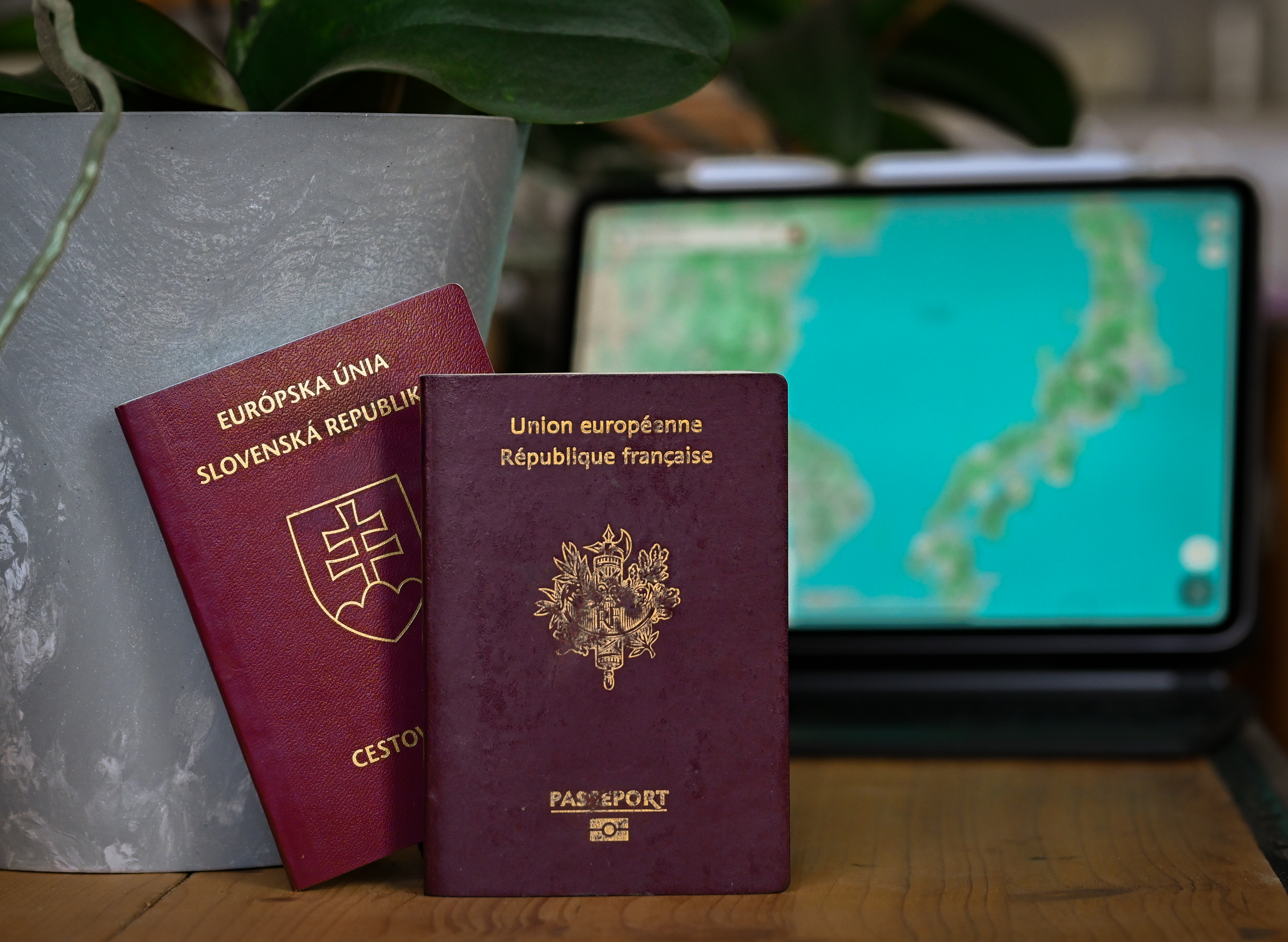
    I am a European citizen, so for me this is nothing too complicated. To make a long story short, on this website, you will find all the information you need, depending on your country of origin. Based on how much time you plan to spend in Japan, you may or may not need to apply for a VISA. In general, if you travel for a time period (as a European citizen) or less than 90 days, you can simply enter Japan without applying for a VISA.

    My travel will last about 85 days, but before this plan, I actually wanted to go there with a working holiday VISA. I will share a brief story about my boyfriend and me applying for this type of VISA. This will clarify what to expect and encourage you to do your own research thoroughly.

    To start, my partner is French and applied for the working holiday VISA when he was 30. For the French, the age limit for application is 30 years old; however, that covers the full year of being 30, just until the day you turn 31. Interestingly, French citizens have one year to travel to Japan after their VISA application is accepted, starting on the day of submitting the application. It is very important to note that for Slovaks, as well as myself, I can only apply 3 months in advance of my travel. Not knowing about this and thinking that the rules are the same for France and Slovakia, I applied 6 months in advance. I spent a lot of money to get back to Slovakia since, at the time, I was living abroad. Which in the end was completely useless, and I ended up being told to come in 3 months again.

    By this story, I just want to stress that it is very important to check all the information on entering Japan on the official government website of your country! If you do so and all your documents are filled out, the criteria are met, you have a valid passport, and all your duties are fulfilled, you should not have any problems with the entrance.

    Speaking about the documents, normally you have them available on the website, consisting of some basic forms with your personal data, but also a motivation letter, an extensive list of your plans in Japan, or a balance of money you need to have on your bank account, all depending on your country of origin and the type of VISA you are applying for.

    Insurance and medical advice 🩺

    If you travel to Japan, please do 2 things. Firstly, make sure you have a valid travel insurance that covers the whole stay in Japan. You can search for an insurance company online, from your country or abroad. Just please make sure it is a good company that you trust and that will cover all costs according to your needs. I would recommend taking a basic hospitalisation insurance as well as third-party liability insurance at least! Depending on your desired program, personal preference, or time you want to spend in Japan, you can also insure your belongings, dental care, extra hospitalisation, loss of passport, even a plane cancellation or death…. haha… and whatever else your heart desires. Please do not hesitate and do so.

    Secondly, make sure to discuss this travel with your healthcare provider. He might recommend that you do some vaccinations or boosters of what you already have, as well as inform you about potential health risks that are currently arising in Japan. This also depends a lot on your personal plan, the time of the year you travel to Japan, and your medical history. For example, if you travel to Japan in summer and you plan to spend most of your time volunteering on a rice field, you would want to consider being vaccinated against Japanese encephalitis, which is spread by mosquito bites. To conclude, I am sure that your GP will know the best about what the current threats are and what your options are to protect yourself, which does not need to be only in the form of vaccines or pills 😉.

    For example, we are traveling to Japan from the end of September until mid-December. In this period, the mosquitoes are not as present in the summer, which is why we decided to skip the vaccine against Japanese encephalitis, since it is also quite costly. The price in Belgium was at that time around 200-250€ per vaccine. Instead, our GP recommended that we wear long-sleeved pyjamas and use a good-quality repellent spray. Moreover, we have decided to have a boost of tetanus and checked for the efficacy of hepatitis A & B vaccines, which are mandatory in Europe since you were a kid.

    Paying in Japan 💴

    As you already know, the currency in Japan is Japanese yen. Currently, the price of the yen is exceptionally low compared to the euro, which is unfortunate for the Japanese. However, as a European traveling to Japan, I have an advantage; many things might be cheaper than I expected when I first started planning my trip 1-2 years ago.

    When you are traveling to Japan, you have to think about how you are going to handle your money. How will you pay? By cash or contactless? What will the cost for withdrawal or bank transfer be when paying in a different currency? How much can you withdraw in Japan without paying fees? To answer all these questions, you need to look at the plans your bank is providing. If the options are rather poor, you might want to consider temporarily (or permanently) joining an online bank. We had decided to use online banks. Concretely, Revolut and N26 were our options, and the reason for these two was mostly because we wanted to bring some variability in case problems with payment arise during our trip. Many online banks, such as Transferwise, Easybank, Wise, Bunq, and many others, have great plans for your travel, and are perfectly capable of providing you with all the features you dream of. Just do your research and choose what feels the most profitable option for you.

    Phone / SIM card 📱

    If you are from Europe or America, your phone will obviously not be able to connect to your network in Japan, and so your phone will automatically connect to the Japanese network. Please make sure this doesn’t happen while you have SIM or roaming settings on. If you accidentally forget to turn off this feature before you land, you might have to pay a lot of unnecessary fees to your phone company. That’s why, please make sure you disable it at the same time that you turn your flight mode on.

    Regarding your phone number, I would encourage you to try not to call at all during your stay in Japan. Nowadays, we can use the internet connection for everything, for example, through WhatsApp or other social media, like Instagram. You just need to make sure you will have a great internet connection throughout your stay. Preferably, you can search for an eSIM with the best network connection. You will find there are plenty, and you can choose according to your personal preferences.

    Travel app 📲

    When planning your trip, it can be hard to organise everything. Elderly people used to just print their bookings and keep their little folder with themself at all costs, nowadays we keep our booking on the phone through booking.com or other booking engine, which is a great way how to get your overview, however if you travel for extended period of time, like me, it might be more and more complicated to keep track of everything. I was recommended by my friend to try to use an app called Stippl! There are plenty of actions you can do in this app that will definitely make your day easier, for example:

    • You can plan your trip your way: You can drag and drop destinations, hotels, and activities into a neat itinerary. If you’ve booked something through Booking.com, Viator, or Airbnb, just forward the confirmation email to Stippl, and it’ll add it to your plan automatically.
    • Work with friends or family: If you are planing to travel with others you can share your itinerary with a link, and everyone can chip in, edit, or just follow along. It’s like a shared travel doc, but way smarter.
    • Get inspired: It can happen that you are stuck for ideas, in that case you can browse itineraries from other travelers or influencers, tweak them to fit your style, and save yourself hours of research. You can even share your own trips and let others use them as a starting point.
    • Keep track of your budget: The app also helps you watch your spending, showing you the total cost, per-person expenses, and even handles different currencies. Plus, you’ll always know what’s booked and what’s still up in the air.
    • See the big picture: The app maps out your route, shows distances between stops, and keeps your schedule clear. It’s like having a personal travel assistant in your pocket. In short, Stippl takes the chaos out of trip planning, so you can focus on the fun parts.

    Where to stay 🏨

    There are many ways to find accommodation in Japan. In my opinion, the cheapest and most interesting option is Hostelworld. Not only can you find very inexpensive rates, ranging from around 20-30€ per person per night, but it also enables you to connect with people who are staying in the hostel at the same time as you. This feature creates a great space for making new friends or organising trips with strangers. It is a great booking option, especially if you travel alone. In 90% of hostels in Japan, you can find women-only rooms, which is great if you are travelling solo as a SOLO female. Other than shared rooms in some hostels, there are also private rooms available, which are a little more expensive, around 30€ and more per night per room. You can book this type of accommodation if you want to have more privacy from time to time. Many of these places have shared spaces where you can socialise, as well as a washing machine and dryer, a storage place or safe, a common kitchen, or the possibility to rent a bike.

    If you are not interested in sharing a room with a bunch of strangers and you prefer a little more luxury, you can easily book through booking.com. The rates here are a little more expensive, depending on the location and hotel, but you can find great options. One of the hotel chains recommended by our Japanese friend is Toyoko Inn. There are many interesting and affordable options, and they are available in many places in Japan, usually with breakfast included.

    When traveling in Japan, I’d encourage you to explore local accommodation options beyond Airbnb. While I personally use and appreciate Airbnb in Europe, I’ve learned from friends in Japan that the platform has had unintended effects on the local housing market, making it harder for young families to find affordable homes. Japan offers many wonderful and budget-friendly alternatives for lodging, so if possible, consider supporting those options instead. It’s a small way to help preserve housing accessibility for locals while still enjoying your trip!

    Transportation in Japan 🚅

    One of the most expensive items on your trip expense list will definitely be the transportation in Japan. Japanese trains are well known for their punctuality and efficiency; however, they are crazy expensive!

    Let’s start with the fees for a single ticket. According to JRailPass, n.d., the rates are around 20 yen per km for short distances and under 10 yen per km for long distances. Obviously, the price may vary depending on the type of train and your additional services; however, in my opinion, that is quite expensive. To get more info about the tickets, please feel free to read more information about trains on the official website of Central Japan Railway Company.

    If you know you will be using the train a lot, there is also a possibility to purchase a subscription. All the information about the subscriptions can be found on Japan Rail Pass. From this website, I have retrieved the fees for the train subscription:

    Table retrieved from Japan Rail Pass, (n.d.), Purchase: Price

    When you are buying your tickets, you probably want to save as much money as possible, and you have some options to do so. On one hand, you can buy a ticket at every station just before your travel (or a few days in advance), or, on the other hand, you can buy a subscription. Just make sure you have your expenses calculated and see what will be cheaper for you.

    If you are a budget-conscious person, as I am, you might also consider travelling by bus wherever possible. This should be a relatively cheaper alternative; however, be prepared that it will take more time to get to your destination, and there are fewer possible destinations you can travel to.

    You might also consider to use apple wallet to pay for your tickets. Using the travel card Suica can make your transportation in Japan much more efficient. You can simply go to the apple wallet, click on the ‘+’ to add new cards, select travel cards and choose Suica. After adding a desired balance on the card, you can just beep in the stations and buses, and then check out when you exit the station, which will result in retrieving the balance for your travel. This card should work in most of the places in Japan, but not all, so make sure you have some cash with you at all times.

    Arrival to Japan 🛬

    Finally, you got your visa, planned your trip, booked the first stay, bought the plane tickets, and simply, you made sure everything is in the right order, and now it is time for you to finally travel to Japan. When you enter the airport in Japan, you will have to go through a control. For a more fluent check, you should go to visit Japan web, where you can pre-install all your personal information, together with your passport. If you are traveling with your family, you can also add other family members to make the process even more efficient. Through this website, you can also create your tax-free QR code, which will enable you to pay for certain products tax-free. You can simply visit the website and have all the necessary information with you ready.

    References

    JRailPass. (n.d.). Japan train tickets: A complete guide. Retrieved September 17, 2025, from https://www.jrailpass.com/blog/japan-train-tickets

    Japan Rail Pass. (n.d.). Purchase: Price. Retrieved September 17, 2025, from https://japanrailpass.net/en/purchase/price/

    And what about you? Do you have an interesting travel in front of you? Share with me in the comment bellow! 😆