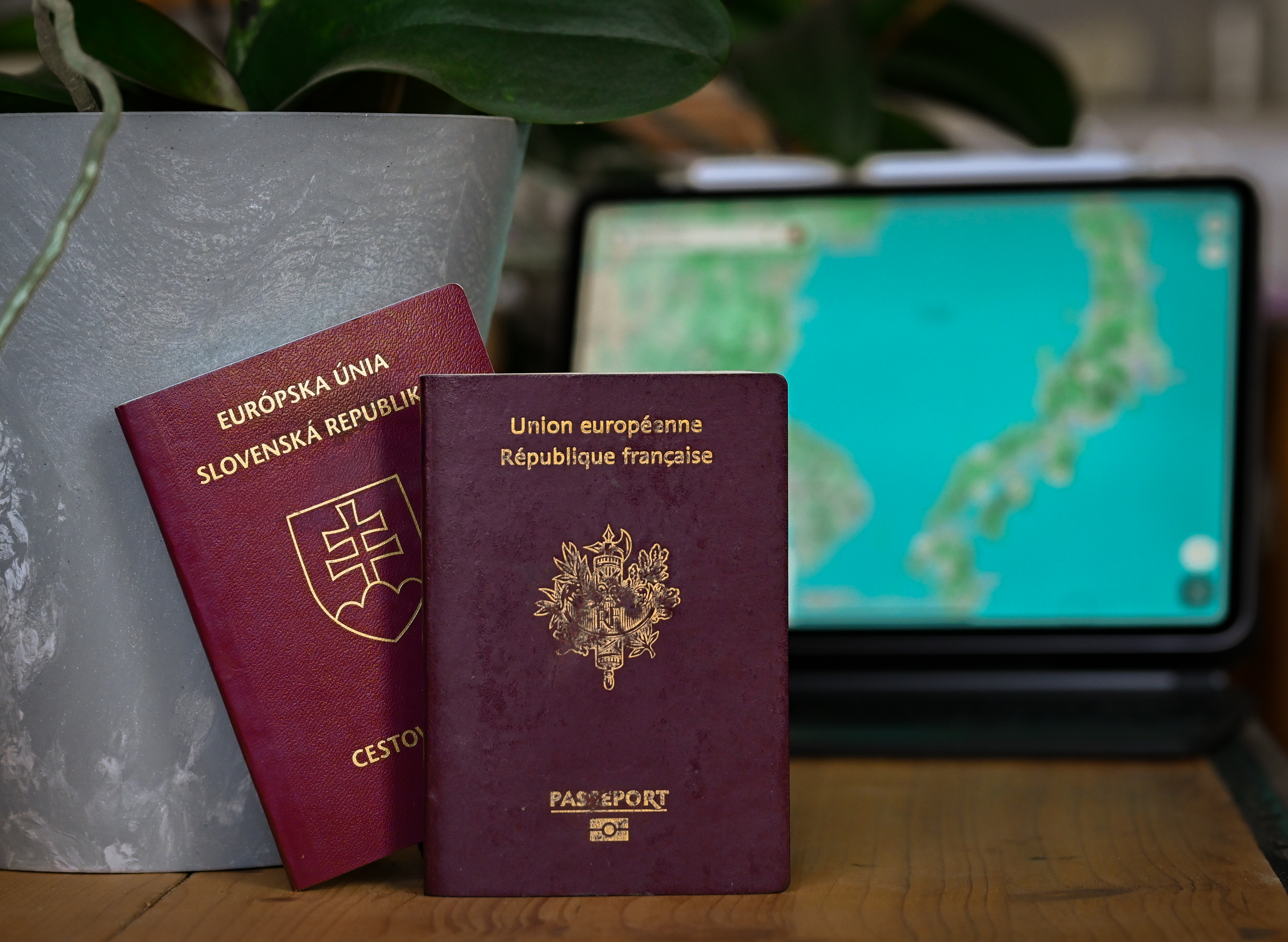
For a very long time, my dream was to travel to Asia. 🌏 The distinct culture and spectacular nature are definitely something that played a significant role in my decision to do this incredible trip. However, as a lover of food, a possible future chef 👩🍳 , and a gourmand 😋, my main motivation was the cuisine. After finishing the university and saving up for this trip for a few years, I was finally ready to travel. Since I can remember, I have always done it this way, finding a short time somewhere in between the chapters of my life. It can be both a great opportunity to reflect on one’s life, along with a time to relax or focus on other interests in life. This trip was supposed to happen between the end of my studies and my working life, and I would recommend anyone to do something similar if they can. 👌
What’s on this reader?
In this post, I want to cover how it was to plan a trip to Japan, all the essential information that I had to deal with, as well as what to do and plan before entering. Basically, anything that I had to research about the entry, costs, and life there, together with my personal experience. Let’s dive into the details!
- Visa 🛂
- Insurance and medical advice 🩺
- Paying in Japan 💴
- Phone / SIM card 📱
- Travel app 📲
- Where to stay 🏨
- Transportation in Japan 🚅
- Arrival to Japan 🛬
- References
Visa 🛂
I am a European citizen, so for me this is nothing too complicated. To make a long story short, on this website, you will find all the information you need, depending on your country of origin. Based on how much time you plan to spend in Japan, you may or may not need to apply for a VISA. In general, if you travel for a time period (as a European citizen) or less than 90 days, you can simply enter Japan without applying for a VISA.
My travel will last about 85 days, but before this plan, I actually wanted to go there with a working holiday VISA. I will share a brief story about my boyfriend and me applying for this type of VISA. This will clarify what to expect and encourage you to do your own research thoroughly.
To start, my partner is French and applied for the working holiday VISA when he was 30. For the French, the age limit for application is 30 years old; however, that covers the full year of being 30, just until the day you turn 31. Interestingly, French citizens have one year to travel to Japan after their VISA application is accepted, starting on the day of submitting the application. It is very important to note that for Slovaks, as well as myself, I can only apply 3 months in advance of my travel. Not knowing about this and thinking that the rules are the same for France and Slovakia, I applied 6 months in advance. I spent a lot of money to get back to Slovakia since, at the time, I was living abroad. Which in the end was completely useless, and I ended up being told to come in 3 months again.
By this story, I just want to stress that it is very important to check all the information on entering Japan on the official government website of your country! If you do so and all your documents are filled out, the criteria are met, you have a valid passport, and all your duties are fulfilled, you should not have any problems with the entrance.
Speaking about the documents, normally you have them available on the website, consisting of some basic forms with your personal data, but also a motivation letter, an extensive list of your plans in Japan, or a balance of money you need to have on your bank account, all depending on your country of origin and the type of VISA you are applying for.
Insurance and medical advice 🩺
If you travel to Japan, please do 2 things. Firstly, make sure you have a valid travel insurance that covers the whole stay in Japan. You can search for an insurance company online, from your country or abroad. Just please make sure it is a good company that you trust and that will cover all costs according to your needs. I would recommend taking a basic hospitalisation insurance as well as third-party liability insurance at least! Depending on your desired program, personal preference, or time you want to spend in Japan, you can also insure your belongings, dental care, extra hospitalisation, loss of passport, even a plane cancellation or death…. haha… and whatever else your heart desires. Please do not hesitate and do so.
Secondly, make sure to discuss this travel with your healthcare provider. He might recommend that you do some vaccinations or boosters of what you already have, as well as inform you about potential health risks that are currently arising in Japan. This also depends a lot on your personal plan, the time of the year you travel to Japan, and your medical history. For example, if you travel to Japan in summer and you plan to spend most of your time volunteering on a rice field, you would want to consider being vaccinated against Japanese encephalitis, which is spread by mosquito bites. To conclude, I am sure that your GP will know the best about what the current threats are and what your options are to protect yourself, which does not need to be only in the form of vaccines or pills 😉.
For example, we are traveling to Japan from the end of September until mid-December. In this period, the mosquitoes are not as present in the summer, which is why we decided to skip the vaccine against Japanese encephalitis, since it is also quite costly. The price in Belgium was at that time around 200-250€ per vaccine. Instead, our GP recommended that we wear long-sleeved pyjamas and use a good-quality repellent spray. Moreover, we have decided to have a boost of tetanus and checked for the efficacy of hepatitis A & B vaccines, which are mandatory in Europe since you were a kid.
Paying in Japan 💴
As you already know, the currency in Japan is Japanese yen. Currently, the price of the yen is exceptionally low compared to the euro, which is unfortunate for the Japanese. However, as a European traveling to Japan, I have an advantage; many things might be cheaper than I expected when I first started planning my trip 1-2 years ago.
When you are traveling to Japan, you have to think about how you are going to handle your money. How will you pay? By cash or contactless? What will the cost for withdrawal or bank transfer be when paying in a different currency? How much can you withdraw in Japan without paying fees? To answer all these questions, you need to look at the plans your bank is providing. If the options are rather poor, you might want to consider temporarily (or permanently) joining an online bank. We had decided to use online banks. Concretely, Revolut and N26 were our options, and the reason for these two was mostly because we wanted to bring some variability in case problems with payment arise during our trip. Many online banks, such as Transferwise, Easybank, Wise, Bunq, and many others, have great plans for your travel, and are perfectly capable of providing you with all the features you dream of. Just do your research and choose what feels the most profitable option for you.
Phone / SIM card 📱
If you are from Europe or America, your phone will obviously not be able to connect to your network in Japan, and so your phone will automatically connect to the Japanese network. Please make sure this doesn’t happen while you have SIM or roaming settings on. If you accidentally forget to turn off this feature before you land, you might have to pay a lot of unnecessary fees to your phone company. That’s why, please make sure you disable it at the same time that you turn your flight mode on.
Regarding your phone number, I would encourage you to try not to call at all during your stay in Japan. Nowadays, we can use the internet connection for everything, for example, through WhatsApp or other social media, like Instagram. You just need to make sure you will have a great internet connection throughout your stay. Preferably, you can search for an eSIM with the best network connection. You will find there are plenty, and you can choose according to your personal preferences.
Travel app 📲
When planning your trip, it can be hard to organise everything. Elderly people used to just print their bookings and keep their little folder with themself at all costs, nowadays we keep our booking on the phone through booking.com or other booking engine, which is a great way how to get your overview, however if you travel for extended period of time, like me, it might be more and more complicated to keep track of everything. I was recommended by my friend to try to use an app called Stippl! There are plenty of actions you can do in this app that will definitely make your day easier, for example:
- You can plan your trip your way: You can drag and drop destinations, hotels, and activities into a neat itinerary. If you’ve booked something through Booking.com, Viator, or Airbnb, just forward the confirmation email to Stippl, and it’ll add it to your plan automatically.
- Work with friends or family: If you are planing to travel with others you can share your itinerary with a link, and everyone can chip in, edit, or just follow along. It’s like a shared travel doc, but way smarter.
- Get inspired: It can happen that you are stuck for ideas, in that case you can browse itineraries from other travelers or influencers, tweak them to fit your style, and save yourself hours of research. You can even share your own trips and let others use them as a starting point.
- Keep track of your budget: The app also helps you watch your spending, showing you the total cost, per-person expenses, and even handles different currencies. Plus, you’ll always know what’s booked and what’s still up in the air.
- See the big picture: The app maps out your route, shows distances between stops, and keeps your schedule clear. It’s like having a personal travel assistant in your pocket. In short, Stippl takes the chaos out of trip planning, so you can focus on the fun parts.
Where to stay 🏨
There are many ways to find accommodation in Japan. In my opinion, the cheapest and most interesting option is Hostelworld. Not only can you find very inexpensive rates, ranging from around 20-30€ per person per night, but it also enables you to connect with people who are staying in the hostel at the same time as you. This feature creates a great space for making new friends or organising trips with strangers. It is a great booking option, especially if you travel alone. In 90% of hostels in Japan, you can find women-only rooms, which is great if you are travelling solo as a SOLO female. Other than shared rooms in some hostels, there are also private rooms available, which are a little more expensive, around 30€ and more per night per room. You can book this type of accommodation if you want to have more privacy from time to time. Many of these places have shared spaces where you can socialise, as well as a washing machine and dryer, a storage place or safe, a common kitchen, or the possibility to rent a bike.
If you are not interested in sharing a room with a bunch of strangers and you prefer a little more luxury, you can easily book through booking.com. The rates here are a little more expensive, depending on the location and hotel, but you can find great options. One of the hotel chains recommended by our Japanese friend is Toyoko Inn. There are many interesting and affordable options, and they are available in many places in Japan, usually with breakfast included.
When traveling in Japan, I’d encourage you to explore local accommodation options beyond Airbnb. While I personally use and appreciate Airbnb in Europe, I’ve learned from friends in Japan that the platform has had unintended effects on the local housing market, making it harder for young families to find affordable homes. Japan offers many wonderful and budget-friendly alternatives for lodging, so if possible, consider supporting those options instead. It’s a small way to help preserve housing accessibility for locals while still enjoying your trip!
Transportation in Japan 🚅
One of the most expensive items on your trip expense list will definitely be the transportation in Japan. Japanese trains are well known for their punctuality and efficiency; however, they are crazy expensive!
Let’s start with the fees for a single ticket. According to JRailPass, n.d., the rates are around 20 yen per km for short distances and under 10 yen per km for long distances. Obviously, the price may vary depending on the type of train and your additional services; however, in my opinion, that is quite expensive. To get more info about the tickets, please feel free to read more information about trains on the official website of Central Japan Railway Company.
If you know you will be using the train a lot, there is also a possibility to purchase a subscription. All the information about the subscriptions can be found on Japan Rail Pass. From this website, I have retrieved the fees for the train subscription:

When you are buying your tickets, you probably want to save as much money as possible, and you have some options to do so. On one hand, you can buy a ticket at every station just before your travel (or a few days in advance), or, on the other hand, you can buy a subscription. Just make sure you have your expenses calculated and see what will be cheaper for you.
If you are a budget-conscious person, as I am, you might also consider travelling by bus wherever possible. This should be a relatively cheaper alternative; however, be prepared that it will take more time to get to your destination, and there are fewer possible destinations you can travel to.
You might also consider to use apple wallet to pay for your tickets. Using the travel card Suica can make your transportation in Japan much more efficient. You can simply go to the apple wallet, click on the ‘+’ to add new cards, select travel cards and choose Suica. After adding a desired balance on the card, you can just beep in the stations and buses, and then check out when you exit the station, which will result in retrieving the balance for your travel. This card should work in most of the places in Japan, but not all, so make sure you have some cash with you at all times.
Arrival to Japan 🛬
Finally, you got your visa, planned your trip, booked the first stay, bought the plane tickets, and simply, you made sure everything is in the right order, and now it is time for you to finally travel to Japan. When you enter the airport in Japan, you will have to go through a control. For a more fluent check, you should go to visit Japan web, where you can pre-install all your personal information, together with your passport. If you are traveling with your family, you can also add other family members to make the process even more efficient. Through this website, you can also create your tax-free QR code, which will enable you to pay for certain products tax-free. You can simply visit the website and have all the necessary information with you ready.
References
JRailPass. (n.d.). Japan train tickets: A complete guide. Retrieved September 17, 2025, from https://www.jrailpass.com/blog/japan-train-tickets
Japan Rail Pass. (n.d.). Purchase: Price. Retrieved September 17, 2025, from https://japanrailpass.net/en/purchase/price/
And what about you? Do you have an interesting travel in front of you? Share with me in the comment bellow! 😆
Leave a Reply